
Law Student CV: Example, Template & Tips
Before you can practise law, you need to win your first job opportunity. A good law student CV showcases your academic strengths, legal insight and potential. Learn how to write a strong CV for a law student that makes a lasting impression on employers.

- Our customers have been hired by : *Foot Note
A good CV for law students can open doors to internships, clerkships, or your first role as a legal assistant after graduation. An effective law student CV must have the right structure, targeted content that reflects your education and potential, plus follow a professional, readable format.
To help you succeed, I’ve created a complete guide with everything you need, including:
- Law student CV examples
- Law student CV templates
- How to write your CV as a law student, step by step
- Top FAQs about law student CVs
Smarter writing with built-in AI
Get instant, high-quality text suggestions tailored to your specific industry.
SEARCH ALL CV EXAMPLES
Law student CV example
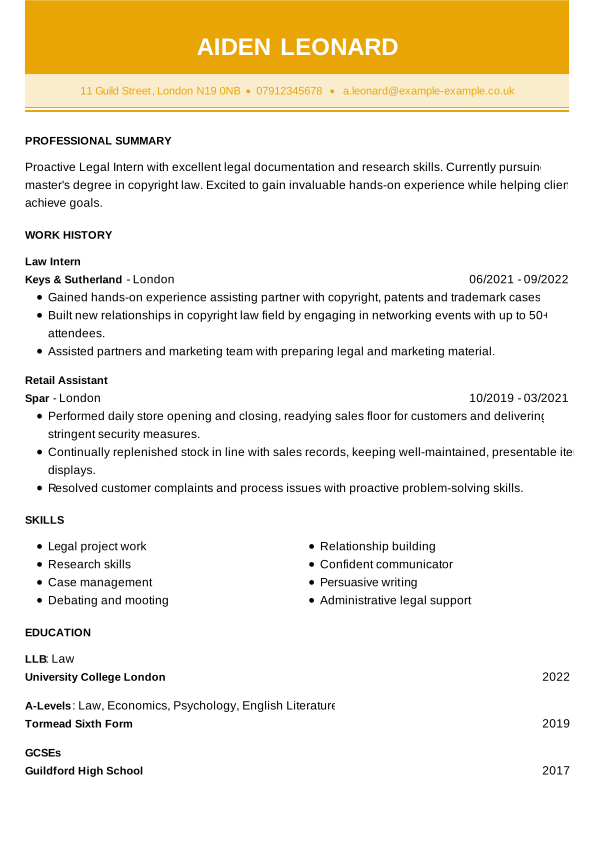
Aiden Leonard
Law Student
London, UK
+44 7912 345 678
a.leonard@mail.com
LinkedIn: linkedin.com/in/aidenleonard-law
Portfolio: aidenleonardlegal.com
Personal Profile
Proactive law student with hands-on legal internship experience and a strong academic foundation in copyright, patent and trademark law. Skilled in legal research, document drafting and client communication. Demonstrated ability to handle confidential information with discretion and accuracy. Eager to contribute analytical insight and meticulous attention to detail to help Zori & Associates deliver outstanding client service and uphold legal excellence.
Work Experience
Legal Intern
Keys & Sutherland LLP, London
Jun 2024–Sep 2025
- Assisted partners and associates with copyright, patent and trademark cases, ensuring all documentation complied with current legislation.
- Conducted legal research and summarised findings into concise briefing notes for internal use.
- Drafted correspondence, contracts and marketing materials in line with firm branding and regulatory requirements.
- Attended client meetings and networking events, building professional connections across the intellectual property field.
Retail Assistant
Spar, London
Oct 2023–Mar 2024
- Demonstrated responsibility through managing daily store operations, including opening, closing and cash handling with full accountability.
- Developed customer service skills by resolving queries efficiently and maintaining high satisfaction scores.
- Built interpersonal qualities and communication skills transferable to client-facing legal work.
Education
LLB Law (Hons)
University College London
2023–Present
Relevant modules: Intellectual Property Law, Commercial Law, EU Law, Legal Systems & Methods.
A-Levels: Law, Economics, Psychology, English Literature
Tormead Sixth Form, Guildford
2022
GCSEs (10, including English and Mathematics)
Guildford High School
2020
Skills
- Legal research and analysis
- Case management and documentation
- Intellectual property and copyright knowledge
- Drafting legal correspondence
- Debating and mooting
- Attention to detail
- Client relationship building
- Team collaboration and communication
- Time management and organisation
Projects
- Researched and drafted a mock legal opinion on a digital copyright infringement case as part of coursework.
- Co-led a university moot team that advanced to the regional semi-finals, developing advocacy and argumentation skills.
Certifications
- Certificate in Legal Research Methods | University College London | 2025
- Introduction to Intellectual Property Law | WIPO Academy | 2024
Volunteering
- Legal Clinic Assistant, UCL Law Society, 2025
Supported pro bono initiatives by conducting client intake interviews and summarising case details for supervising solicitors.
Law student CV template
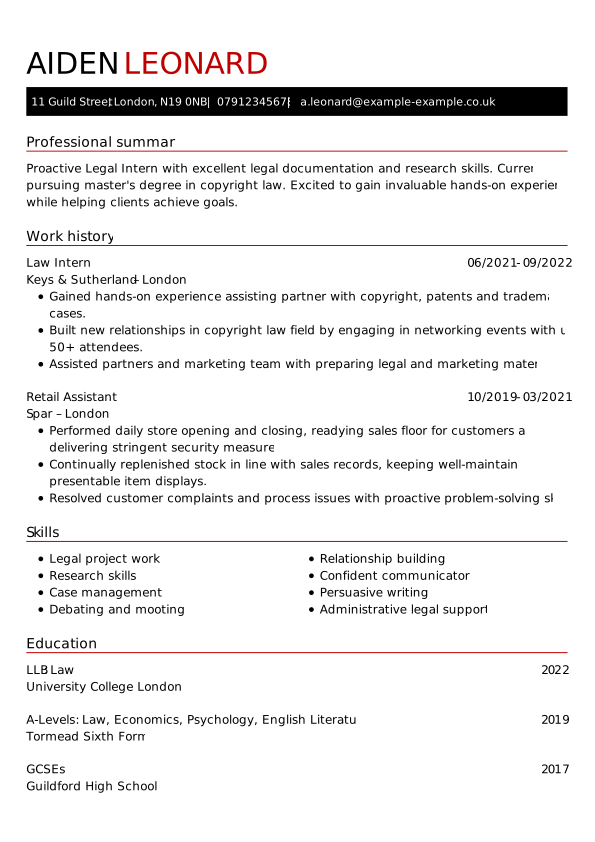
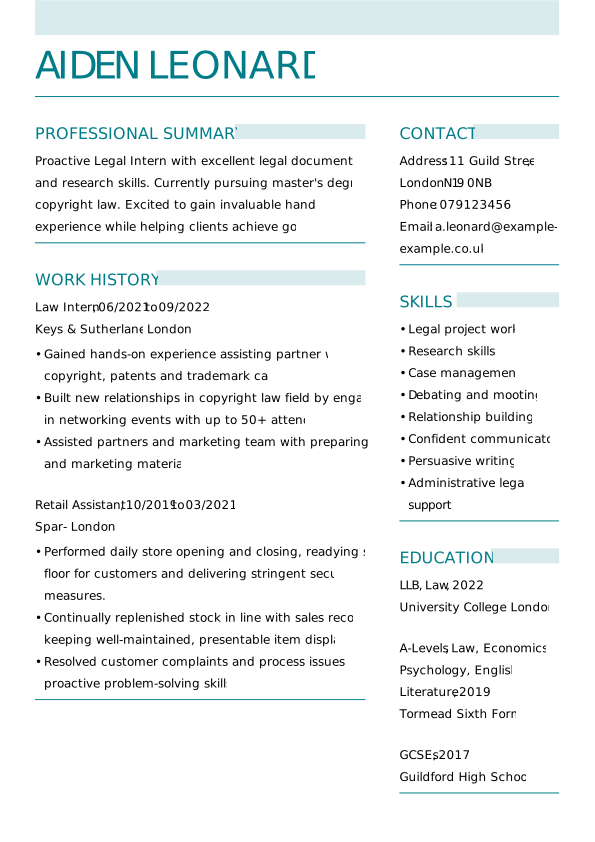
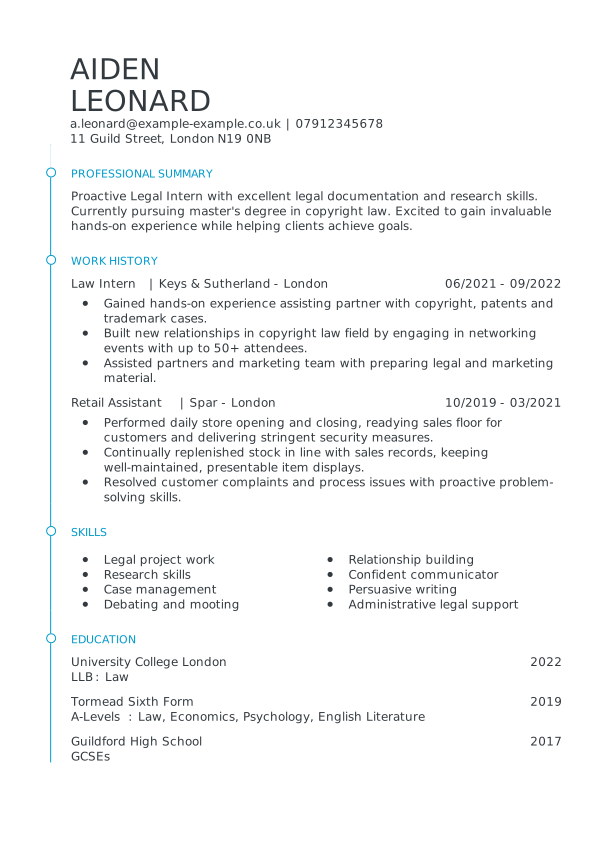
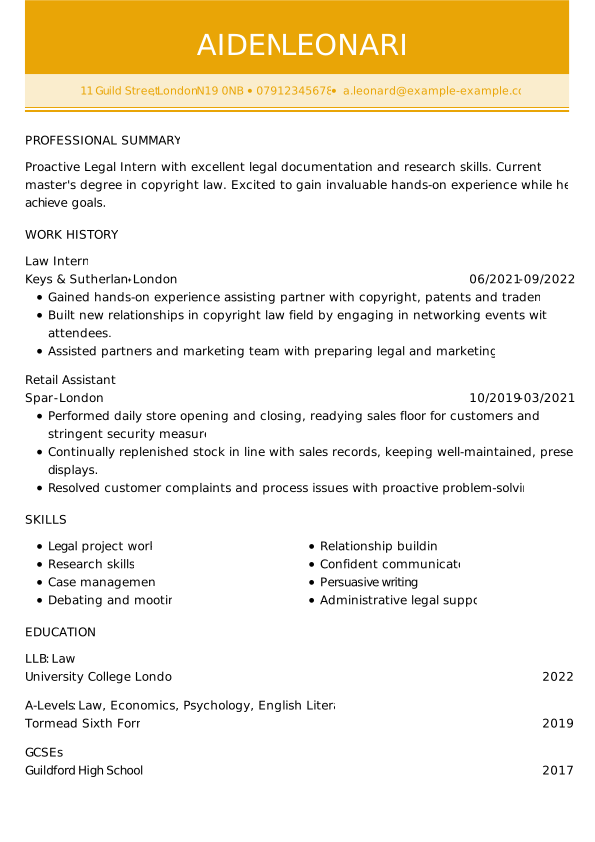
By using a pre-made CV template, you’ll get a head start on landing a new job! MyPerfectCV builder has customisable templates that allow you to tailor your CV to your area of expertise, and then build on it to create your law student CV.
Choosing the right format for your law student CV
The first step in writing your law student CV is choosing the right CV format. The structure you select will help highlight your strengths, whether you have legal experience or are just starting out.
Reverse-chronological CV: best for students with experience
The reverse-chronological format is the most commonly used style for a law student’s CV in the UK. It lists your most recent experience first and works backwards. This layout is ideal if you’ve completed internships, clerkships, or part-time legal work.
It’s also the standard approach used in our law student CV examples, as it makes it easy for recruiters to see your career progress and qualifications at a glance.
Best for:
- Student CVs with legal work experience
- Applicants who want to highlight roles or internships
- Structured, traditional British CV templates
Skills-based CV: ideal for students with no experience
If you’re writing a CV for law students with no experience, the skills-based CV is a better option. This format focuses on your skills and strengths instead of your work history.
You can highlight transferable skills, e.g., legal research, written communication, time management, and teamwork. Any experience you include, such as volunteering or part-time jobs, is listed later to support your skills.
Best for:
Extra formatting tips
No matter which format you choose, follow these tips to keep your CV easy to read:
- Keep your law student CV length to a maximum of 2 pages
- Use a standard CV font like Arial or Times New Roman
- Break up text with subheadings and bullet points
- Add a touch of colour to your CV to highlight your name
How to write a CV for a law student
Learning how to write a CV as a law student is essential. It will come in handy no matter if you’re seeking a job now or just planning to do so when you graduate. Just follow these steps:
1. Add valid contact details to your law student CV
Recruiters need to reach you easily. The first step in writing a law student CV is adding your contact information at the top of the document. This should include:
- Your full name
- Phone number
- Email address — make sure it sounds professional
- Your location: city and postcode are enough
2. Write a strong personal statement
Every standout law student’s CV begins with a clear and concise personal statement. This short paragraph appears at the top of your CV and gives recruiters a quick overview of who you are and what you bring to the table.
Write it this way:
- Use the third person for a polished, professional tone
- Start with your current academic status, e.g., “Completing an LLB with a focus on commercial law”
- Show your area of interest within law, e.g., intellectual property, corporate, or family law.
- Highlight your key strengths, e.g., “Proactive Legal Intern with strong research and drafting skills”
- End with a career goal or what you hope to contribute, e.g., “Keen to gain practical experience and support clients effectively in a dynamic legal environment”
- Keep your introduction under 100 words
- Use keywords from the job advertisement.
3. Mention work or internship experience
Even if you’re still studying, your experience matters. A law student CV doesn’t require years of practice; it simply needs to show skills, initiative, and potential.
In a typical law student CV example, you’ll often find a mix of legal and non-legal experience, such as:
- Legal internships or placements
- Part-time jobs during university (e.g. retail or hospitality)
- Summer or voluntary positions
- Legal research projects or work with student law societies
Even non-legal roles can demonstrate valuable transferable skills like teamwork, communication, time management, and problem-solving.
How to structure each work experience entry:
Job Title
Company Name, Location
Start Date–End Date
Add 3–6 bullet points focusing on achievements and responsibilities that highlight legal or professional skills.
Legal Intern
Keys & Sutherland LLP, London
Jun 2024–Sep 2025
- Assisted partners and associates with copyright, patent and trademark cases, ensuring all documentation complied with current legislation.
- Conducted legal research and summarised findings into concise briefing notes for internal use.
- Drafted correspondence, contracts and marketing materials in line with firm branding and regulatory requirements.
- Attended client meetings and networking events, building professional connections across the intellectual property field.
4. Include relevant law skills
The skills section is a key part of any law student’s CV, whether you’re applying for a vacation scheme, legal assistant role or your first training contract. The good news is that you’ve already built many valuable skills through your degree, research and extracurricular activities.
Recruiters expect a balance of technical and legal abilities and transferable soft skills. Show that you can analyse complex information, communicate clearly and work effectively in a team.
Here’s how to present relevant skills depending on your CV format:
- Traditional format: List 6–10 key skills in bullet points under a clear “Skills” heading; ideal if you already have some legal experience.
- Skills-based CV for a law student: Group skills into categories such as Legal Research or Communication & Advocacy, and support each with 2–3 short bullet points explaining how you’ve demonstrated them.
Essential skills for a law student
- Research
- Specialist area knowledge
- Critical thinking
- Case management
- Familiar with legal proceedings
- Understanding of legal terminology
Desirable skills to set you apart
- Strong speaker
- Good listener
- Rapport building
- Client-focused
- Calm under pressure
- Problem solving
5. Get education right on your law student CV
Your education section is one of the most important parts of a CV for law students, as it shows your legal knowledge and progress towards a degree. As with our law student CV example, UK recruiters expect qualifications to be listed in reverse-chronological order.
- Start with your most recent degree or the one you’re studying for, then work backwards as far as GCSE, depending on your preference.
- Include all relevant qualifications from college onwards: your degree, A levels (ideally including Law) or a BTEC in Applied Law, and GCSEs if they’re recent.
- If you’re still studying, list your current degree with the expected completion date. This helps recruiters see where you are in your legal training.
Here’s the information you’ll need to include with an example:
- Date (or expected date) of qualification
- Level and subject
- Institution
LLB Law (Hons)
University of Leeds, Leeds, UK
September 2024 – June 2027 (Expected)
- Key modules: Contract Law, Criminal Law, Tort Law, Constitutional & Administrative Law, EU Law
- Achievements:
- Predicted 2:1
- Member of the University Law Society and Debating Club
- Participated in a national mooting competition
- Completed pro bono work with the University Legal Advice Centre
- Dissertation:The Impact of the Human Rights Act 1998 on UK Public Law
6. Add extra sections to your law student CV
Once you’ve covered your education, work experience and skills, you can make your law student CV stand out by adding a few optional sections. These extras show your personality, achievements and commitment to developing your legal career.
Useful additions for a CV for a law student:
- Certifications: Include short courses like Legal Research Methods or Commercial Awareness for Lawyers.
- Projects: Add coursework or research that demonstrates analysis or advocacy skills.
- Volunteering: Mention pro bono work, legal clinic support or community initiatives.
- Memberships: List student or professional bodies such as the Law Society or Young Legal Aid Lawyers.
- Languages: Fluency in another language is a strong asset in international law.
- Interests: Include relevant ones like debating, mooting, or writing for a student law publication.
Certifications
- Legal Research Methods | University College London | 2023
- Introduction to Commercial Law | Law Society | 2022
Memberships
- University Law Society
- Young Legal Aid Lawyers
Volunteering
- Legal Clinic Assistant | UCL Law Society | 2023
Dos and don’ts for your law student CV
Tailor every application. The roles you apply for as a law student can differ greatly, so resist the temptation to use one generic CV. Instead, read each job description carefully, pick out key requirements, and reflect them throughout your law student CV, especially in your skills, work history and personal statement.
Show your specialism. If you have a particular area of interest, such as family law, commercial law or intellectual property, make it clear from the start. Mention it in your personal statement and reinforce it through your experience, education and extracurricular activities.
Be clear and concise. Use short paragraphs and bullet points so your CV for a law student is easy to scan. Recruiters often review applications quickly, so a clean, well-organised layout helps your key achievements stand out.
Skip the cover letter. Your cover letter is your chance to explain why you’re passionate about the role and why you’re a great fit. Introduce the position you’re applying for, explain what attracts you to the firm, and highlight relevant achievements that support your application.
Overlook accuracy. Attention to detail is one of the most valued skills in law. Errors, inconsistencies or missing information will work against you. Proofread your law student CV carefully, or ask someone you trust to review it before submission.
Overcomplicate your layout. Stick to a professional font, consistent formatting and clear section headings. Avoid unnecessary graphics or overly creative designs; clarity and professionalism are key in the legal field.
Frequently Asked Questions about law student CVs
What makes a law student’s CV stand out?
To make your law student CV stand out:
- Tailor it to the specific job or internship.
- Use a clear, professional layout that’s easy to scan.
- Highlight your legal knowledge, academic achievements, and transferable soft skills.
- Support every claim with evidence, such as results, key tasks, or measurable outcomes.
Do I need a cover letter with my law student CV?
Yes, a cover letter is almost always expected in legal applications, even for entry-level roles. Whether you’re applying for an internship, training contract or graduate legal assistant position, a well-written cover letter demonstrates motivation, professionalism and understanding of the legal field.
While your CV for a law student outlines your education and experience, your cover letter gives you space to express personality and enthusiasm. For examples of how both documents should work together, explore our tailored cover letter samples.
How do I build my CV as a law student?
To build a strong law student CV, start with the job description. Identify the skills and qualifications the employer values most, then match them with your own experience – from coursework, volunteering, or part-time roles. Use this information to shape your sections and make your CV relevant and targeted.
What should a law student’s CV look like?
A professional CV template for a law student should be clean and easy to read. Recruiters often skim-read, so use clear section headings, consistent spacing and standard fonts (such as Arial or Times New Roman, size 10–12). Keep colours minimal and stick to a simple layout, as clarity and organisation matter more than design.
How do you write a personal profile for a legal CV?
Your personal profile, also known as a personal statement or professional summary, should be two to four sentences long. It needs to highlight your area of interest in law, key capabilities (like research, drafting or documentation), and your current academic level. For example:
“LLB student specialising in commercial law, with strong research and analytical skills, eager to contribute to a dynamic legal team.”
What are the most important things to include in a CV for a law student?
A strong law student CV should include the following sections:
- Contact details: Your full name, location, email address and phone number.
- Personal statement: A short summary highlighting your main qualities and a career goal.
- Work history: Roles listed in reverse-chronological order, with 3–6 bullet points per position. If you lack legal experience, move this section below your skills or education.
- Skills: List 6–10 relevant abilities, or group them by category if you’re using a skills-based format.
- Education: Include all relevant qualifications, including degrees you’re currently completing.
Related Student CV Examples & Templates

Create your law student CV today
Writing a great law student CV doesn’t have to be as difficult as building a legal case. With myPerfectCV, you can find everything you need in one place – including our top-rate CV examples, law student CV templates, and an easy-to-use online builder. Simply enter the job you’re applying for, then choose from pre-written content to showcase your expertise and experience. Get started today!
*The names and logos of the companies referred to above are all trademarks of their respective holders. Unless specifically stated otherwise, such references are not intended to imply any affiliation or association with myperfectCV.