
Graphic Designer CV Template
Whether you specialise in web, print or motion design, our graphic designer CV templates give you the tools to highlight your unique strengths. With real graphic design CV examples and an easy-to-use builder, you can quickly create a curriculum vitae that blends creativity with professionalism.

- Our customers have been hired by : *Foot Note
As a graphic designer, your CV needs to be more than just professional; it should reflect your creativity, technical skills, and eye for detail. Whether you’re applying for a role in print, digital, or branding, your CV is your first design project in the hiring process.
In this guide, we’ll help you create a strong graphic designer CV that highlights your talent and sets you apart. You’ll get:
- A free graphic designer CV example
- Ready-to-use graphic designer CV templates
- Expert tips for showcasing your design experience and portfolio
- A how-to CV writing guide
- Common mistakes to avoid on a graphic design CV
Smarter writing with built-in AI
Get instant, high-quality text suggestions tailored to your specific industry.
SEARCH ALL CV EXAMPLES
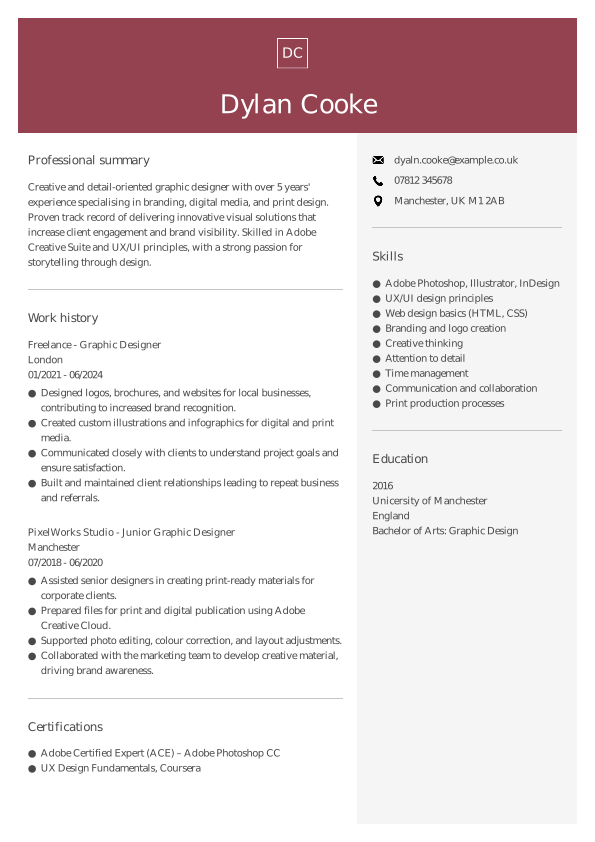
Graphic designer CV example
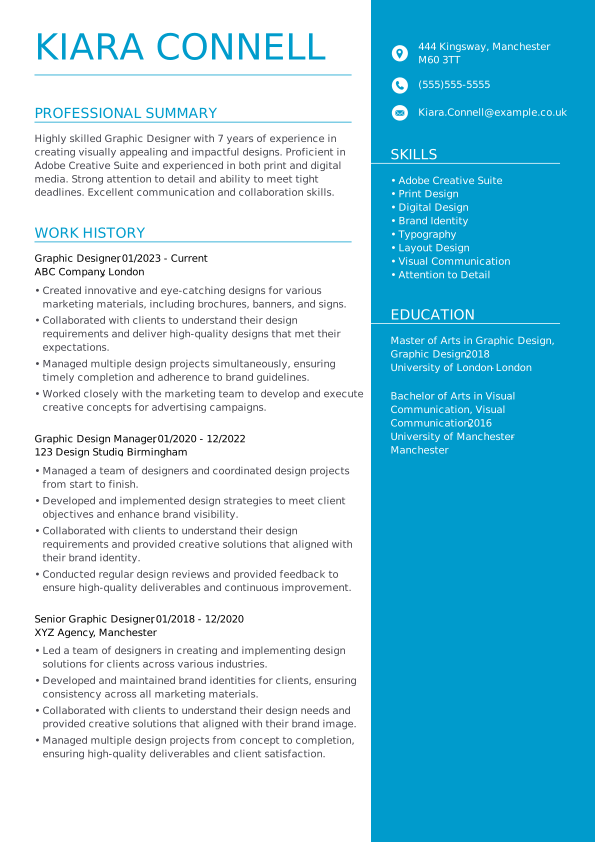
Kiara Connell
444 Kingsway
Manchester M60 3TT
(555)555-5555
Kiara.Connell@example.co.uk
Professional summary
Highly skilled Graphic Designer with 7 years of experience in creating visually appealing and impactful designs. Proficient in Adobe Creative Suite and experienced in both print and digital media. Strong attention to detail and ability to meet tight deadlines. Excellent communication and collaboration skills.
Work history
January 2023 – Current
ABC Company – London, Graphic Designer
- Created innovative and eye-catching designs for various marketing materials, including brochures, banners, and signs.
- Collaborated with clients to understand their design requirements and deliver high-quality designs that met their expectations.
- Managed multiple design projects simultaneously, ensuring timely completion and adherence to brand guidelines.
- Worked closely with the marketing team to develop and execute creative concepts for advertising campaigns.
January 2020 – December 2022
123 Design Studio – Birmingham, Graphic Design Manager
- Managed a team of designers and coordinated design projects from start to finish.
- Developed and implemented design strategies to meet client objectives and enhance brand visibility.
- Collaborated with clients to understand their design requirements and provided creative solutions that aligned with their brand identity.
- Conducted regular design reviews and provided feedback to ensure high-quality deliverables and continuous improvement.
January 2018 – December 2020
XYZ Agency – Manchester, Senior Graphic Designer
- Led a team of designers in creating and implementing design solutions for clients across various industries.
- Developed and maintained brand identities for clients, ensuring consistency across all marketing materials.
- Collaborated with clients to understand their design needs and provided creative solutions that aligned with their brand image.
- Managed multiple design projects from concept to completion, ensuring high-quality deliverables and client satisfaction.
Skills
- Adobe Creative Suite
- Print Design
- Digital Design
- Brand Identity
- Typography
- Layout Design
- Visual Communication
- Attention to Detail
Education
- 2018, University of London London
Master of Arts in Graphic Design, Graphic Design - 2016, University of Manchester Manchester
Bachelor of Arts in Visual Communication, Visual Communication
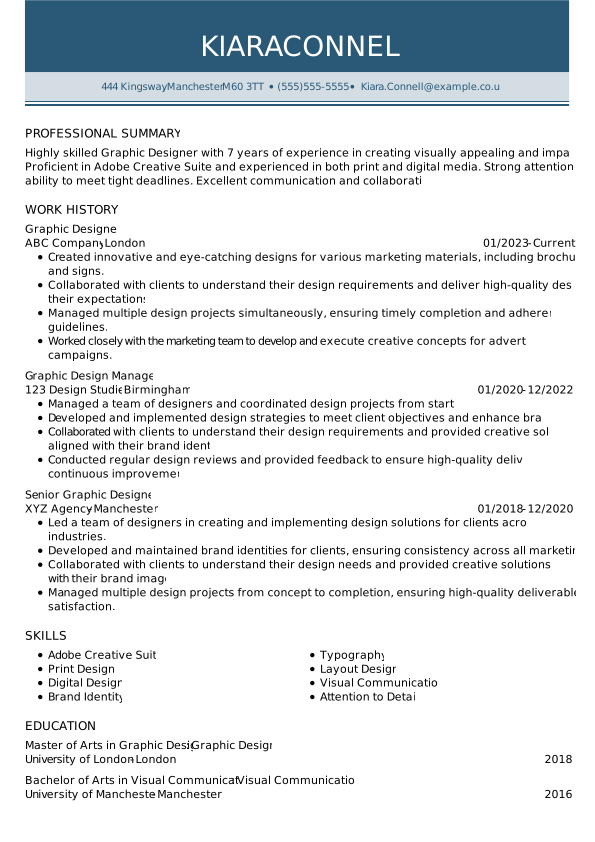
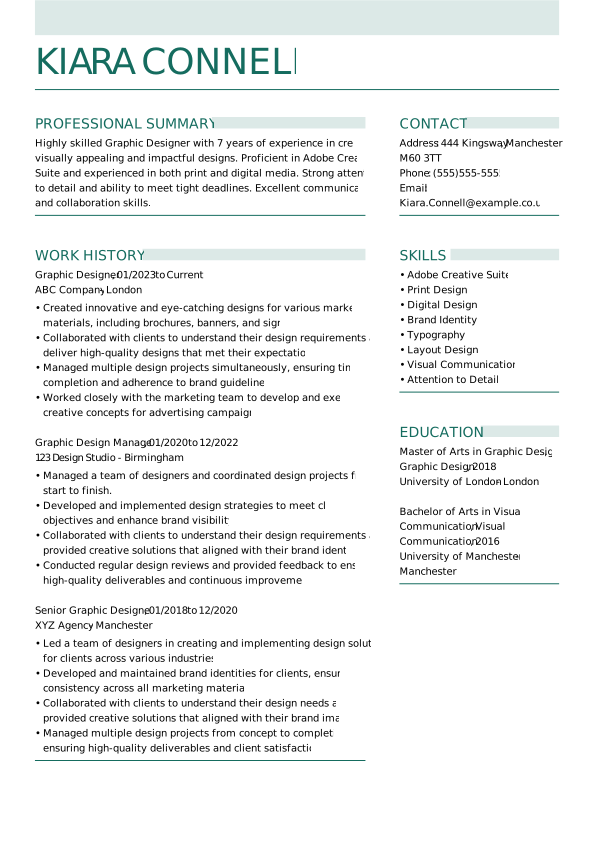
Graphic designer CV templates
Our CV templates are tailored for the UK job market and ideal for graphic designers. Whether you’re a print designer, digital artist, or branding specialist, these templates help you showcase your creativity, experience, and skills in a clean, professional format. Browse our collection to find a graphic designer CV template that suits your style and career level.
Graphic designer CV format
Before you dive into designing your graphic designer CV, choosing the right format is essential. A strong CV format lays the foundation for showcasing your creative work, experience, and skills effectively, without overwhelming the reader.
A well-structured graphic design curriculum vitae helps you:
- Highlight your most relevant achievements
- Present your experience clearly
- Align your CV with the job requirements
- Keep your document clean, scannable, and professional
There are several ways to structure your graphic design CV, but two formats work especially well:
1. Reverse-chronological CV format
- Best for: Experienced graphic designers with a solid work history
- How it works: Lists your roles from the most recent to the oldest
- Why it works: Shows career progression and relevant job titles at a glance
- Additional note: In this format, your work experience section appears higher up on the CV and takes up more space
This is the most commonly used graphic designer CV format and works well if you’ve held multiple positions in agencies, in-house teams, or as a freelancer.
2. Skills-based CV format (Functional CV)
- Best for: Recent graduates, career changers, or those with limited direct experience
- How it works: Focuses on your creative and transferable skills rather than job history
- Why it works: It helps to demonstrate your design capabilities even without extensive work experience
- Additional note: In a skills-based CV, the skills section appears more prominently, often near the top, occupying more space and shifting the focus away from a limited work history.
Which CV format should you use?
- If you have solid experience, choose the reverse-chronological format
- If you’re new to the role, choose a skills-based CV
Extra graphic design CV formatting tips
- Keep it short: One to two pages is ideal for a graphic designer CV
- Use clear headings and spacing: Avoid long paragraphs
- Choose a professional font: Arial, Calibri, or Times New Roman (10–12 pt)
- Use a CV template: A ready-made design saves time and ensures clean formatting that is both ATS-friendly and visually appealing.
How to write a CV for a graphic designer
Creating a standout CV starts with the right structure. Whether you’re applying for your first role or have years of design experience, knowing which sections to include will help your CV catch a hiring manager’s eye.
We’ve created a step-by-step overview of what to include in your graphic designer CV, along with expert tips and examples.
- Step 1: Add your contact details
- Step 2: Write your CV personal statement
- Step 3: Show off your work experience
- Step 4: Add your graphic design skills
- Step 5: Showcase your education
Step 1: Add your contact details
This may seem obvious, but it’s a crucial step that many potential candidates overlook. You should add your contact details near the top of your CV. Ensure that you clearly write them, preferably in a larger or bold font. This will ensure that your hiring manager won’t miss them
Example of a contact section
Elana Walls
07912345678
elana.walls@example-example.co.uk
Glasgow, W12 4WB
Step 2: Write your CV personal statement
You already know first impressions matter in an interview – the same applies to your CV. One of the first things employers will read is your personal statement, so it needs to immediately convey who you are, what you do, and why you’re a strong fit.
In just 3–4 sentences, your goal is to make a quick but powerful introduction. Follow this formula to make your summary standout:
1. Start strong with who you are
Open with a short, confident sentence describing your current role (or area of expertise) and your experience level. Skip long-term career goals here — keep the focus on your current value.
2. Include a key achievement
Back up your value with an example. Choose a recent, relevant accomplishment and include data if you can.
Example: Led a full rebrand project for a SaaS company, resulting in a 15% increase in customer engagement.
3. Highlight unique skills or specialisms
Finish your personal statement by showcasing what sets you apart. Whether it’s UX knowledge, Adobe Creative Suite mastery, or cross-functional teamwork
Additional tips for your graphic designer CV summary:
- Use action verbs and positive adjectives to keep it engaging
- Write in the third person for a more professional tone
- Make sure your personal statement matches the tone and role in the job advert
Example personal statement:
Creative and results-driven graphic designer with over 6 years of experience crafting compelling visual content across digital, print, and branding projects. Known for delivering high-impact designs that align with strategic marketing goals, including leading a full brand refresh that boosted social media engagement by 25%. Proficient in Adobe Creative Suite, UI/UX principles, and cross-functional collaboration.
Step 3: Show off your work experience
The work experience section is one of the most impactful parts of your graphic designer CV. Showing that you’ve successfully delivered creative projects in previous roles will immediately grab a hiring manager’s attention.
This section should take up a significant amount of space on your curriculum vitae.
Tips for presenting your work experience
- Start with your current or most recent role, then work backwards.
- List up to 5 key responsibilities or achievements per job.
- Use bullet points for easy reading and quick scanning.
- Tailor each point to the job ad, especially if it mentions specific tools or skills (e.g. Adobe Illustrator, UX design, branding).
- Focus on results and impact—quantify outcomes where possible.
Example of CV work experience:
Graphic Designer
Purple Pixel Studio, London
March 2020 – Present
- Designed marketing collateral and digital assets for over 30 clients in retail, tech, and education industries.
- Led the visual identity development for a major client rebrand, resulting in a 22% increase in engagement.
- Created custom illustrations and iconography aligned with each brand’s guidelines.
- Collaborated with developers and content teams to deliver responsive, user-focused design solutions.
- Managed multiple design projects with tight deadlines using tools like Adobe Creative Suite, Figma, and Sketch.
Step 4: Add your graphic design skills
Your graphic designer CV should present a balanced mix of technical know-how and personal qualities. Employers want to see that you can respond to client demands, deliver high-quality visual work, and collaborate with others effectively. To create a well-rounded curriculum vitae, aim to include 8-10 key skills, split between hard and soft skills.
Must have designer CV skills
- Expertise in software including Adobe® Illustrator, Photoshop, and Inkscape
- UX/UI design principles
- Typography and layout design
- Web design (HTML/CSS basics, Figma, Sketch)
- Branding and visual identity
- Project management
Additional skills
- Communication and presentation skills
- Teamwork orientated
- Ability to effectively plan
- Budgeting analysis
- Understanding of licensed products
- Marketing know-how
- Time management skills
Step 5: Showcase your education
While a formal degree can strengthen your application, many graphic designers come from a wide range of educational backgrounds. A qualification in graphic design, visual arts, digital media, or communications can provide a strong foundation, but employers are just as interested in your portfolio, creative process, and practical skills.
If you’re an entry-level designer or switching careers, your education section plays a more important part. Use this space to highlight relevant coursework, design projects, or technical training. You can also include certifications in tools like Adobe Creative Suite, UX/UI design, or motion graphics to show your commitment to the craft.
Example of an education section:
BA (Hons) Graphic Design
University of the Arts London, UK
Graduated: July 2022
Adobe Certified Professional
Visual Design Using Adobe Photoshop
Dos and don’ts for a graphic designer CV
Not all graphic design jobs are created equal. Whether you’re applying for a role in publishing, branding, UX/UI, or marketing, it’s vital to tailor your CV. Highlight relevant projects, tools, and experience that match the job description. A tailored CV shows hiring managers that you understand the brief and can deliver work aligned with their brand or industry.
If you’re changing careers, self-taught, or lacking agency experience, certifications can help you stand out. Courses in Adobe Creative Suite, UI/UX design, web design, or animation add value and credibility. Include the course title, provider, and date to show your commitment to professional development.
Your CV is only half the story. A portfolio of your best work is essential. Add a clear, clickable link to an online portfolio, personal website, or Behance profile. Make sure it’s mobile-friendly and showcases a variety of high-quality, relevant projects.
It’s tempting to showcase your creativity with a flashy CV design, but clarity is key. Avoid overly stylised fonts, bright colours, or unconventional layouts that make your CV hard to read. A clean, well-structured CV with consistent formatting will always be more effective—save your creativity for your portfolio.
Your graphic design CV questions answered
How long should my graphic designer CV be?
A: Aim for one to two pages. Keep it concise but detailed enough to showcase your most important skills, experience, and achievements.
Should I include a portfolio link on my CV?
Yes, always include a link to your online portfolio or design website. It allows hiring managers to see your work firsthand and can be a deciding factor in the hiring process.
Should I include a cover letter with my graphic designer CV?
Yes, it’s highly recommended to include a cover letter. It gives you a chance to explain why you’re the perfect fit, highlight key achievements, and show your passion for design. Plus, it lets you add extra details and strengths you didn’t have space to showcase in your CV, helping you make a stronger impression on hiring managers.
Should I use a creative design for my graphic designer CV?
While it’s important to show your design skills, your CV should prioritise clarity and readability. Avoid overly complex layouts, bright colours, or unusual fonts that might confuse Applicant Tracking Systems (ATS) or make your CV hard to read. Keep your CV clean and professional, and save your creativity for your portfolio where it can really shine.
Related Computer software

Start building your graphic designer CV today
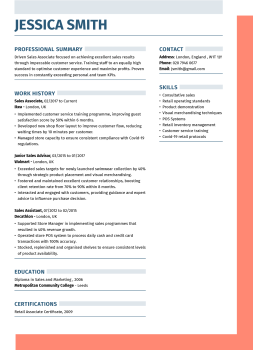
Ready to showcase your creative skills and design expertise? Our expert tips, templates, and examples will help you craft a standout graphic designer CV. Use our CV builder to personalise and download your CV in just a few easy steps.
*The names and logos of the companies referred to above are all trademarks of their respective holders. Unless specifically stated otherwise, such references are not intended to imply any affiliation or association with myperfectCV.